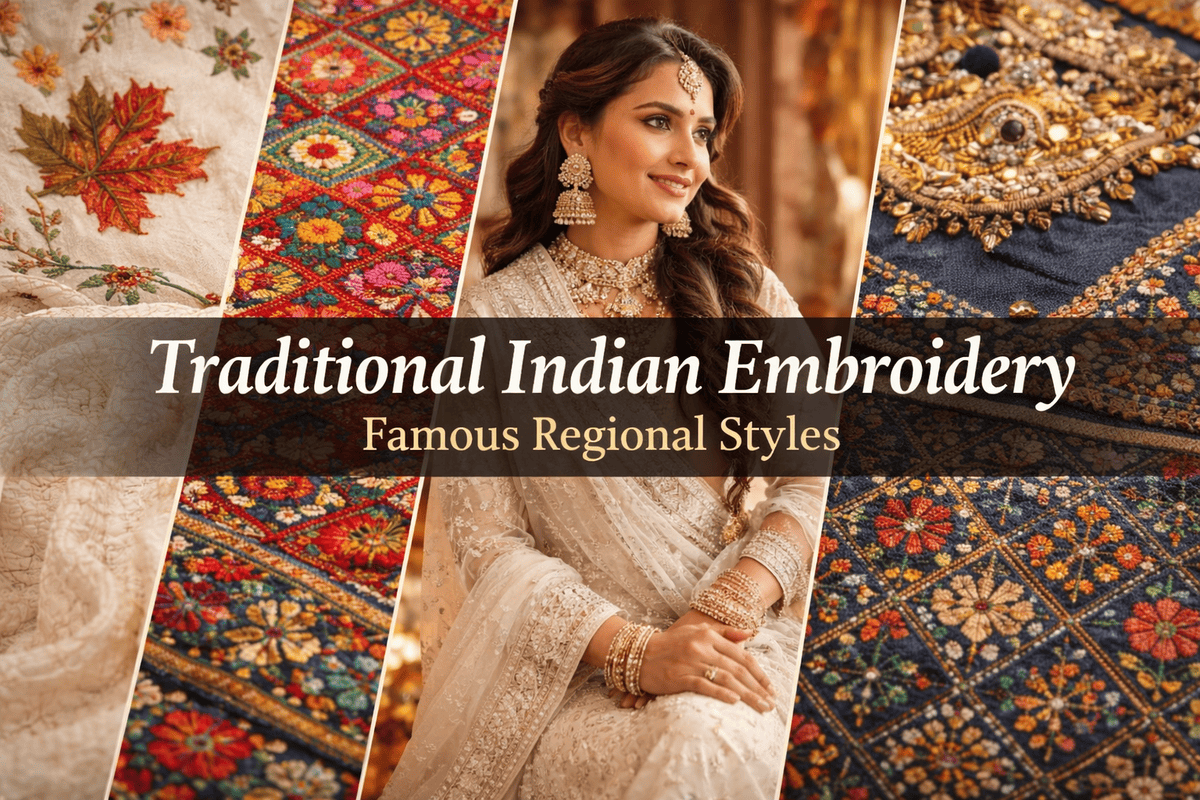
Traditional Indian embroidery Famous Styles is not just decorative needlework — it is centuries of heritage stitched into fabric, each thread carrying the stories, beliefs, and artistic expressions of communities across India.
From the snow-clad valleys of Kashmir to the vibrant villages of Punjab, from the royal courts of Lucknow to the pastoral landscapes of Bengal, every region has developed its own distinctive embroidery style.
These techniques reflect the natural surroundings, cultural practices, and economic histories of their origins. In this guide, you will learn about the most celebrated regional embroidery styles of India — their origins, techniques, signature motifs, and how they continue to shape Indian fashion in 2026.
Whether you are an embroidery enthusiast, a fashion designer, or someone who simply appreciates handcrafted artistry, this comprehensive exploration will deepen your understanding of India’s living textile traditions.
1. Why Traditional Indian Embroidery is Special
What makes traditional Indian embroidery truly remarkable is its unbroken lineage — techniques perfected over hundreds of years and passed down through generations of artisans. Computerized embroidery is very trending at this time because it took less time and also provides custom designs. Each embroidery style is a living testament to India’s rich history and heritage, often originating in royal courts, religious practices, or the daily lives of rural communities. Beyond aesthetics, embroidery carries deep symbolism and identity. The motifs chosen — whether a peacock, a lotus, or a temple — are rarely arbitrary. They represent regional flora and fauna, spiritual beliefs, prosperity symbols, or folk narratives that have shaped the community for centuries.
In 2026, these traditional styles are experiencing a renaissance. fashion houses collaborate with Traditional Indian embroidery workshops, and contemporary designers are reviving age-old techniques for modern silhouettes. This resurgence ensures that the craft not only survives but thrives, providing sustainable livelihoods to thousands of artisans while preserving India’s intangible cultural heritage.
2. Top Regional Embroidery Styles of India
India’s embroidery landscape is as diverse as its geography. Each state has contributed for Traditional Indian embroidery unique techniques, stitches, and aesthetic sensibilities. Here are the most celebrated styles that define India’s embroidery heritage.
Chikankari – Uttar Pradesh
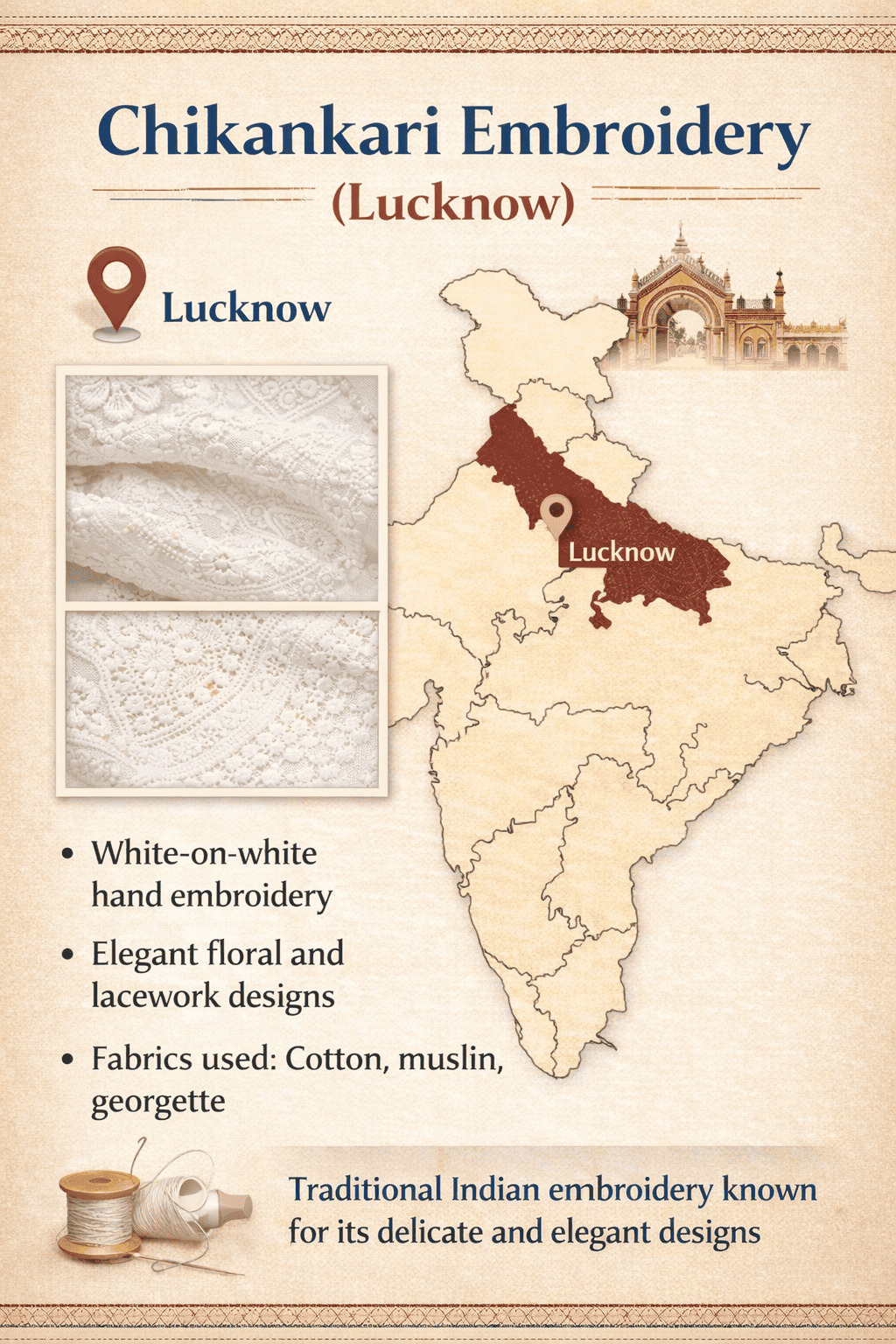
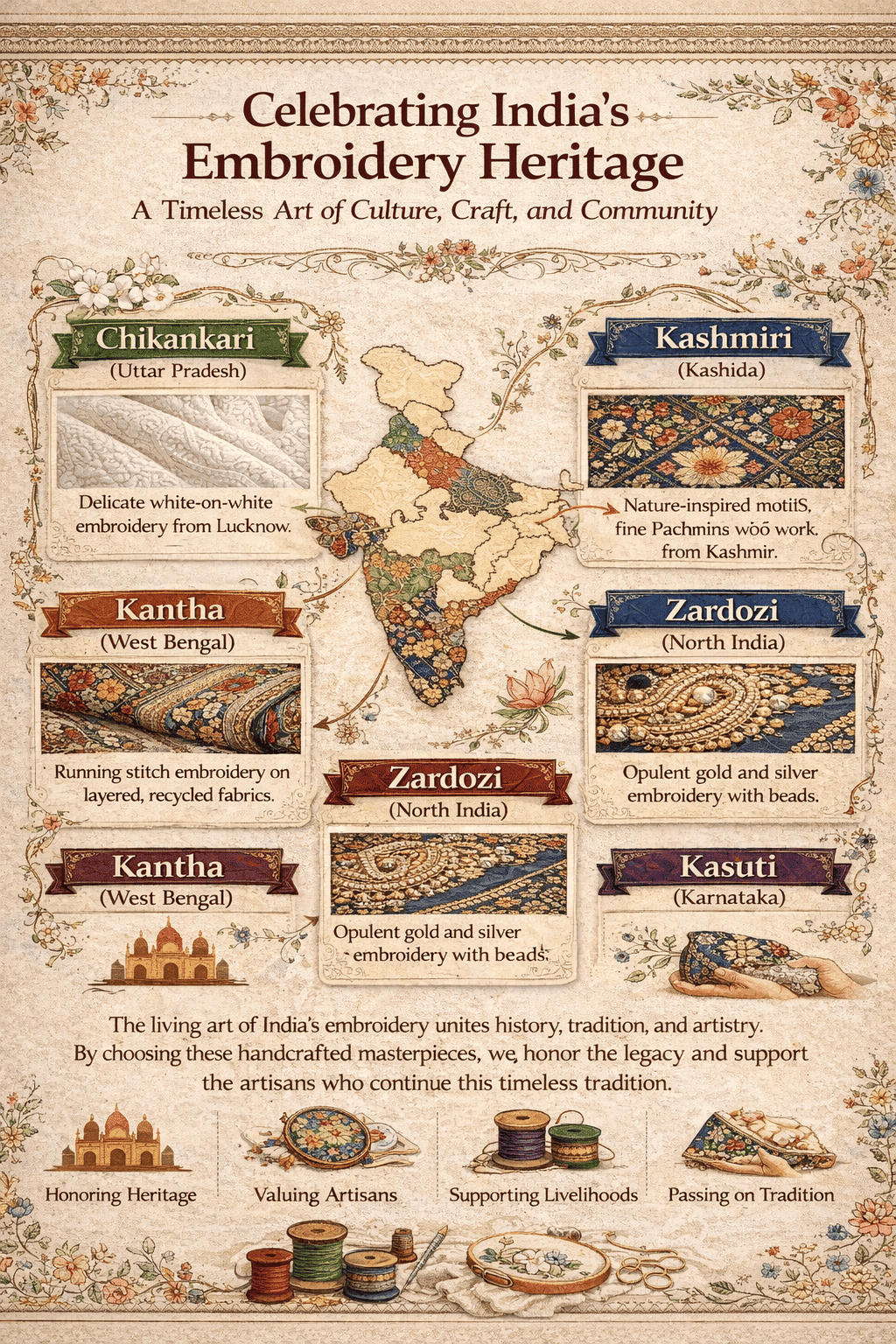
Chikankari embroidery is the crown jewel of Lucknow’s textile heritage. Legend attributes its introduction to Noor Jahan, wife of Mughal emperor Jahangir, in the 17th century. This delicate white-on-white embroidery technique is known for its incredibly fine stitchwork, employing around 35 different stitches divided into three categories: flat stitches (like bakhia), raised stitches (like murri and phanda), and openwork stitches called jaalis that create trellis-like patterns.
Traditional Indian embroidery executed on muslin or cotton using white thread, modern Chikankari now appears on silk, georgette, chiffon, and even synthetic fabrics, with colored threads adding contemporary flair. The motifs are almost exclusively floral — jasmine, roses, lotuses, peacocks, and paisley patterns — drawn from nature.
Today, Chikankari embroidery adorns kurtas, sarees, dupattas, and even home furnishings. Its timeless elegance makes it a staple in Indian ethnic fashion, especially for summer wear where its breathable fabric and airy jaali work offer both beauty and comfort.
Phulkari – Punjab
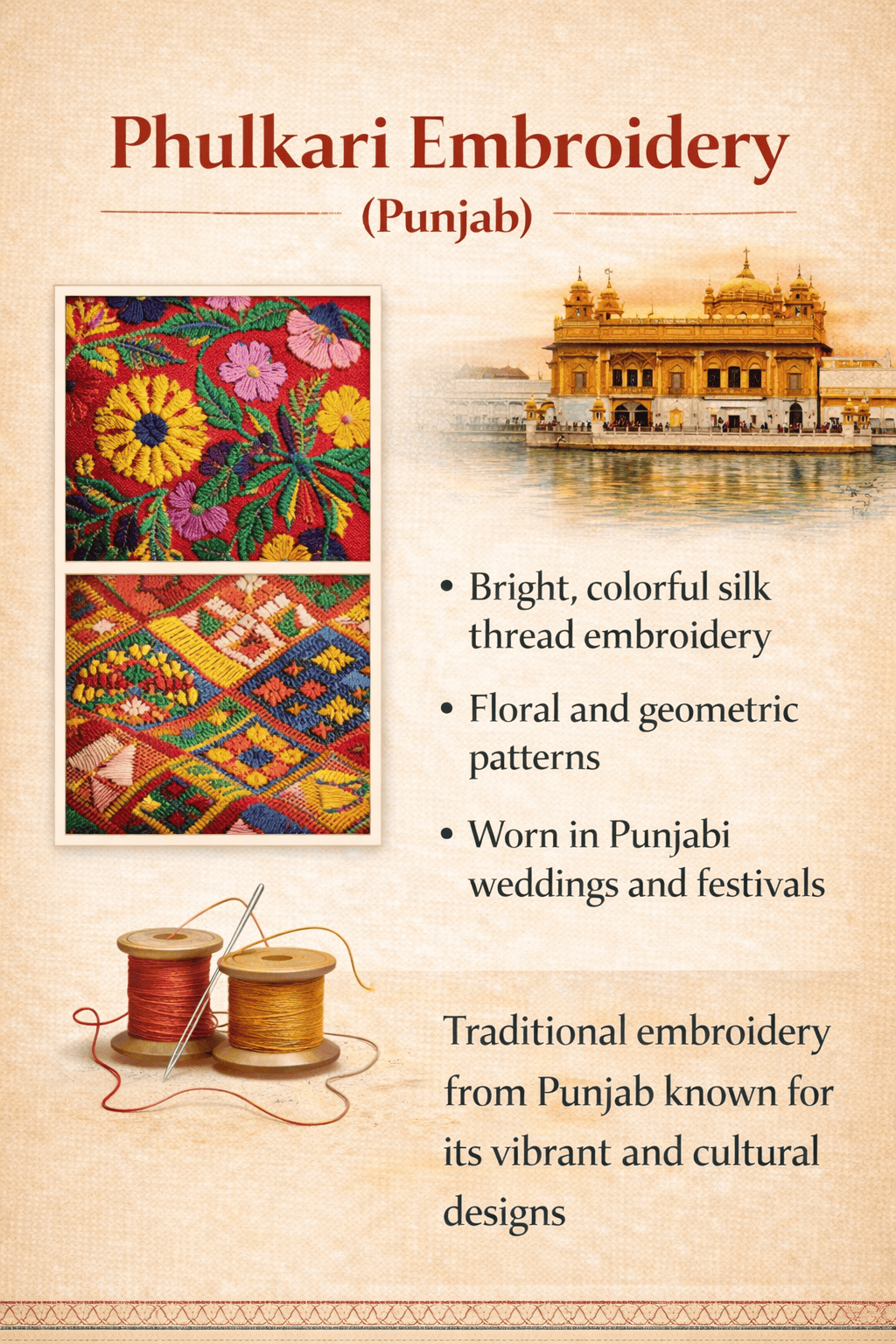
Originating in the Jat community of Punjab, Phulkari — which literally translates to “flower work” — is embroidery that celebrates life, color, and joy. Historically, Phulkari was a vital part of a Punjabi bride’s trousseau, with elaborate pieces called bagh (garden) covering nearly the entire cloth surface with dense, vibrant stitching.
The technique involves darning stitches worked from the reverse side of hand-woven khadi cloth (traditionally dyed rust-red or indigo blue) using untwisted silk floss threads in brilliant hues — magenta, yellow, green, orange, and saffron. The contrast between the dull, earthy base fabric and the luminous silk creates a striking visual effect.
Phulkari motifs include bold geometric patterns, stylized flowers, leaves, and occasionally narrative scenes from daily life. In Traditional Indian embroidery, Phulkari has transcended its traditional boundaries, appearing on contemporary kurtas, dupattas, jackets, and even denim, bringing Punjabi folk art into global fashion.
Kantha – West Bengal
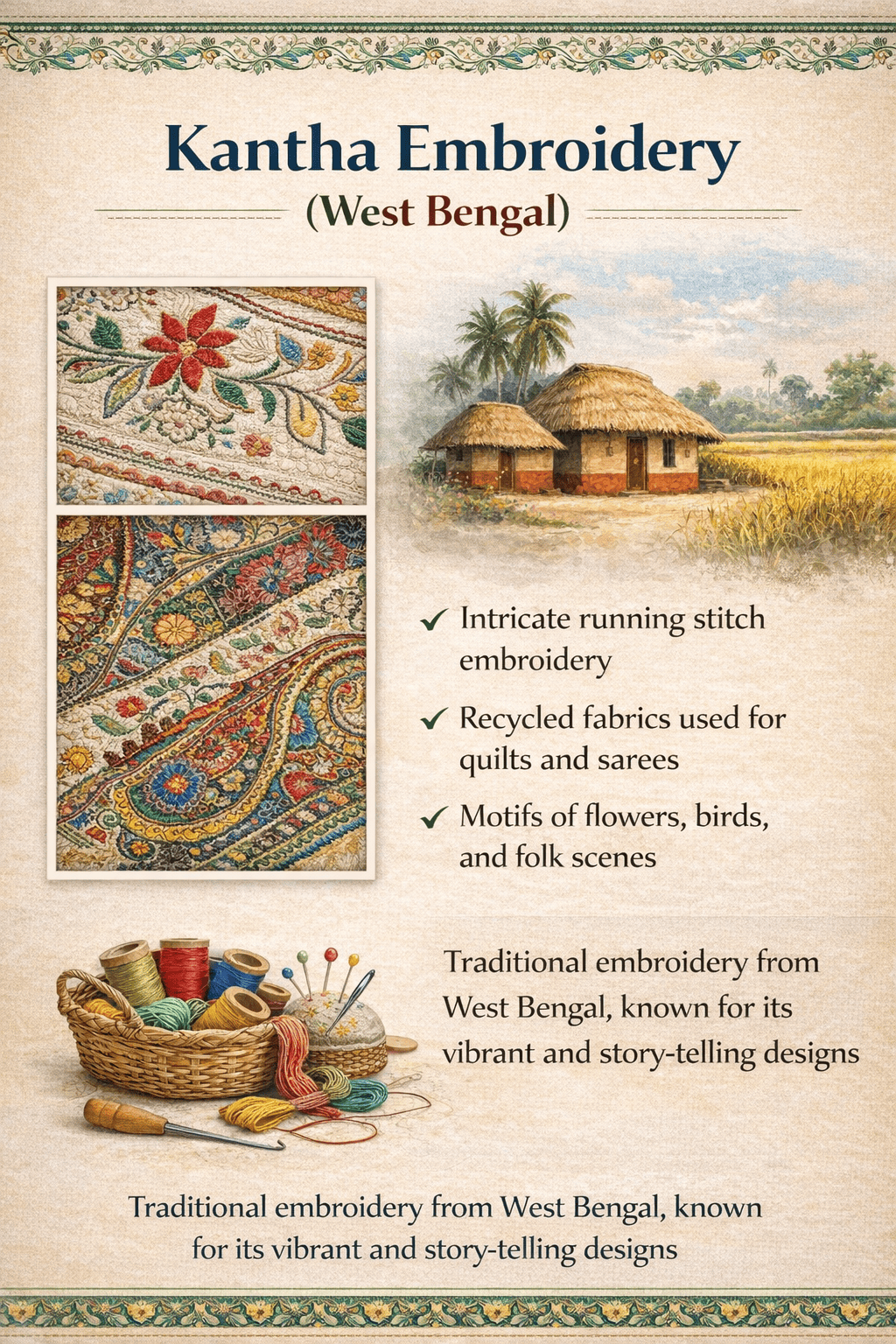
Kantha embroidery is the embodiment of sustainability and storytelling. Practiced primarily by rural women in West Bengal, Odisha, and Tripura, Kantha involves layering old, worn-out sarees or cloth scraps and stitching them together using simple running stitches to create quilts, sarees, and wraps. The process not only recycles fabric but transforms it into functional art.
The running stitch creates a distinctive rippled, wavy texture across the fabric. Motifs are drawn from everyday life, mythology, and nature — flowers, animals, celestial bodies like the sun and moon, and scenes depicting social or domestic themes. The stitching is dense, giving the fabric a unique crinkled appearance and added durability.
Modern Kantha embroidery has found its way onto contemporary fashion — kurtas, jackets, stoles, and home décor items. Its effortless, relaxed aesthetic and the charm of handmade imperfection make it ideal for casual, bohemian, and eco-conscious fashion.It also play a good role in Traditional Indian embroidery.
Zari & Zardozi – North India
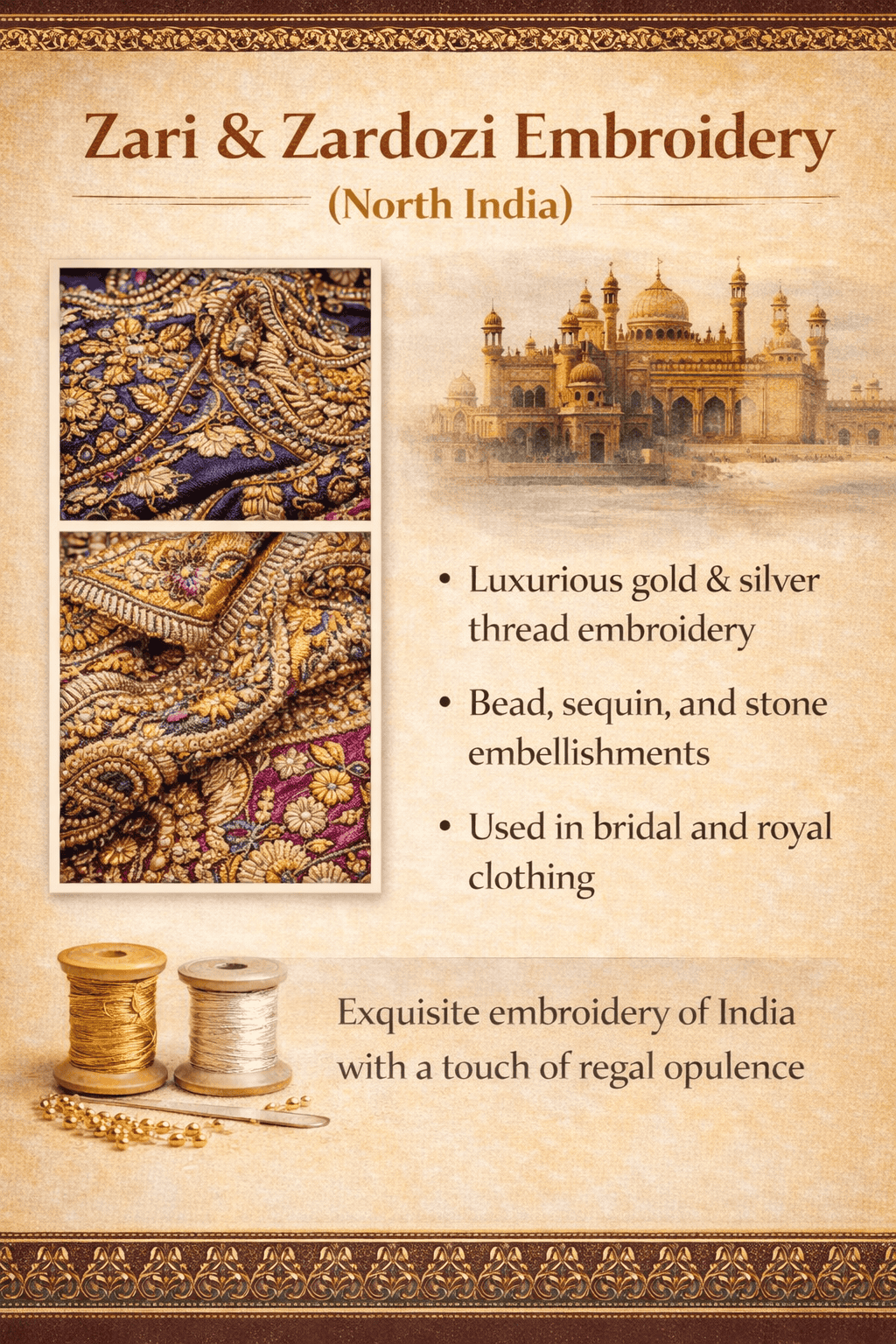
No embroidery speaks of royal opulence quite like Zardozi. Originating in Persia and brought to India during the Mughal era, Zardozi — derived from the Persian words zar (gold) and dozi (embroidery) — uses metallic threads, traditionally made of real gold and silver, to create elaborate, raised designs on luxurious fabrics like silk, velvet, and brocade.
The process is painstakingly slow. Artisans work on fabric stretched over wooden frames, using an aari (hooked needle) to couch metallic threads onto the surface. The embroidery is often embellished further with beads, sequins, pearls, and semi-precious stones, creating a three-dimensional, textured effect.
Zardozi is synonymous with bridal wear, ceremonial garments, and festive attire. Its density and weight make it ideal for lehengas, sherwanis, and heavy dupattas. In 2026, contemporary designers are reinterpreting Zardozi for lighter fabrics and modern silhouettes, making this once-exclusive royal craft accessible to a wider audience.
Kashmiri Embroidery (Kashida) – Kashmir
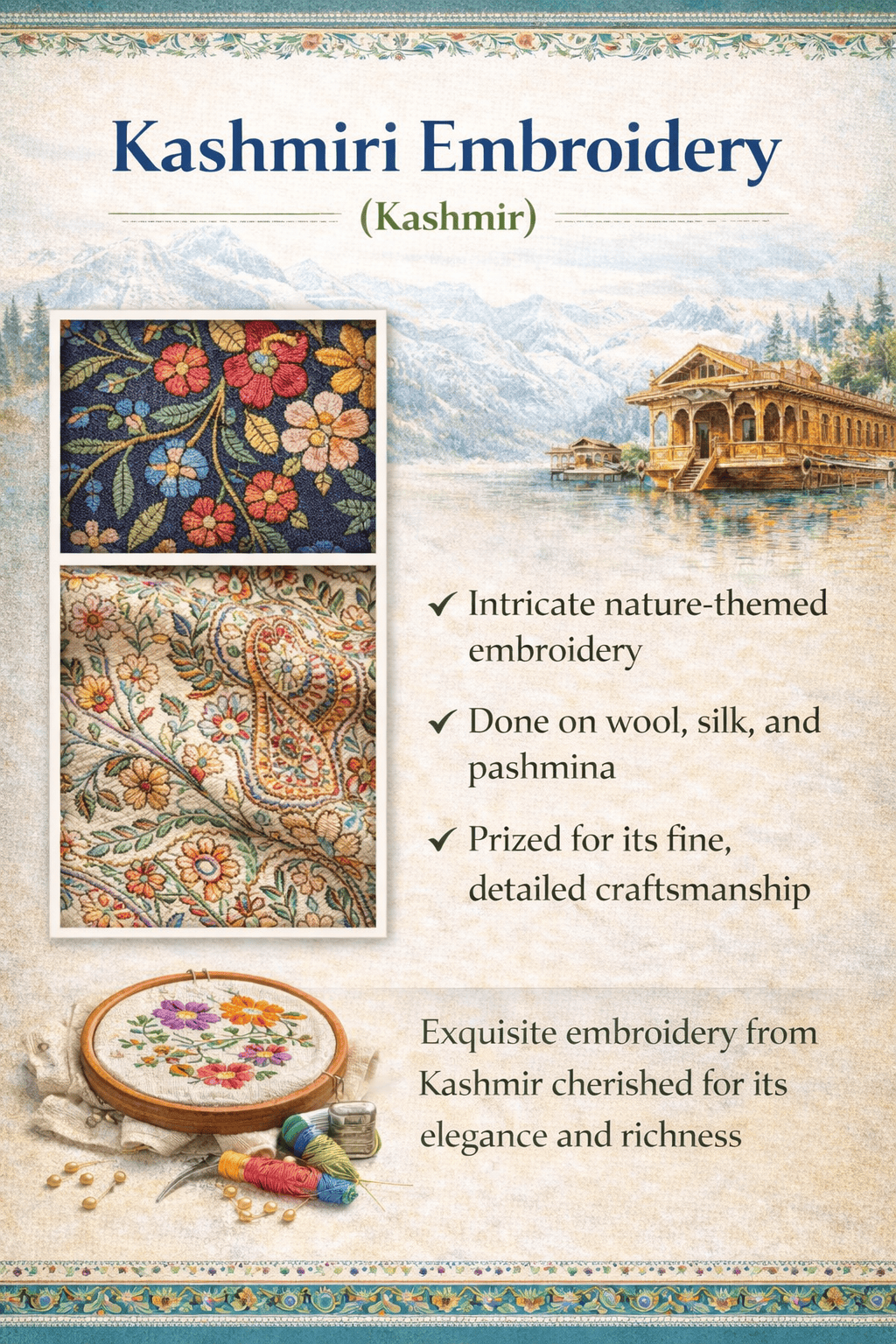
Kashmiri embroidery, also known as Kashida, reflects the breathtaking natural beauty of the Kashmir valley. This embroidery style is practiced primarily by male artisans and is known for its incredibly detailed, nature-inspired motifs — chinars (maple leaves), lotus flowers, peacocks, parrots, kingfishers, and scenic landscapes featuring blooming gardens and flowing rivers.
Executed on fine fabrics like Pashmina wool, silk, and cotton, In Traditional Indian embroidery the Kashmiri embroidery uses fine silk threads in subtle, earthy tones or vibrant hues depending on the design. The stitchwork is smooth, precise, and creates a flat, refined finish. A specialized variation called Raffugiri produces identical patterns on both sides of the fabric — a hallmark of exceptional craftsmanship.
Kashmiri shawls, sarees, and kaftans adorned with this embroidery are prized worldwide. The intricate work requires years of training and skill, making authentic Kashmiri embroidered pieces highly valued heirlooms.
Kasuti – Karnataka
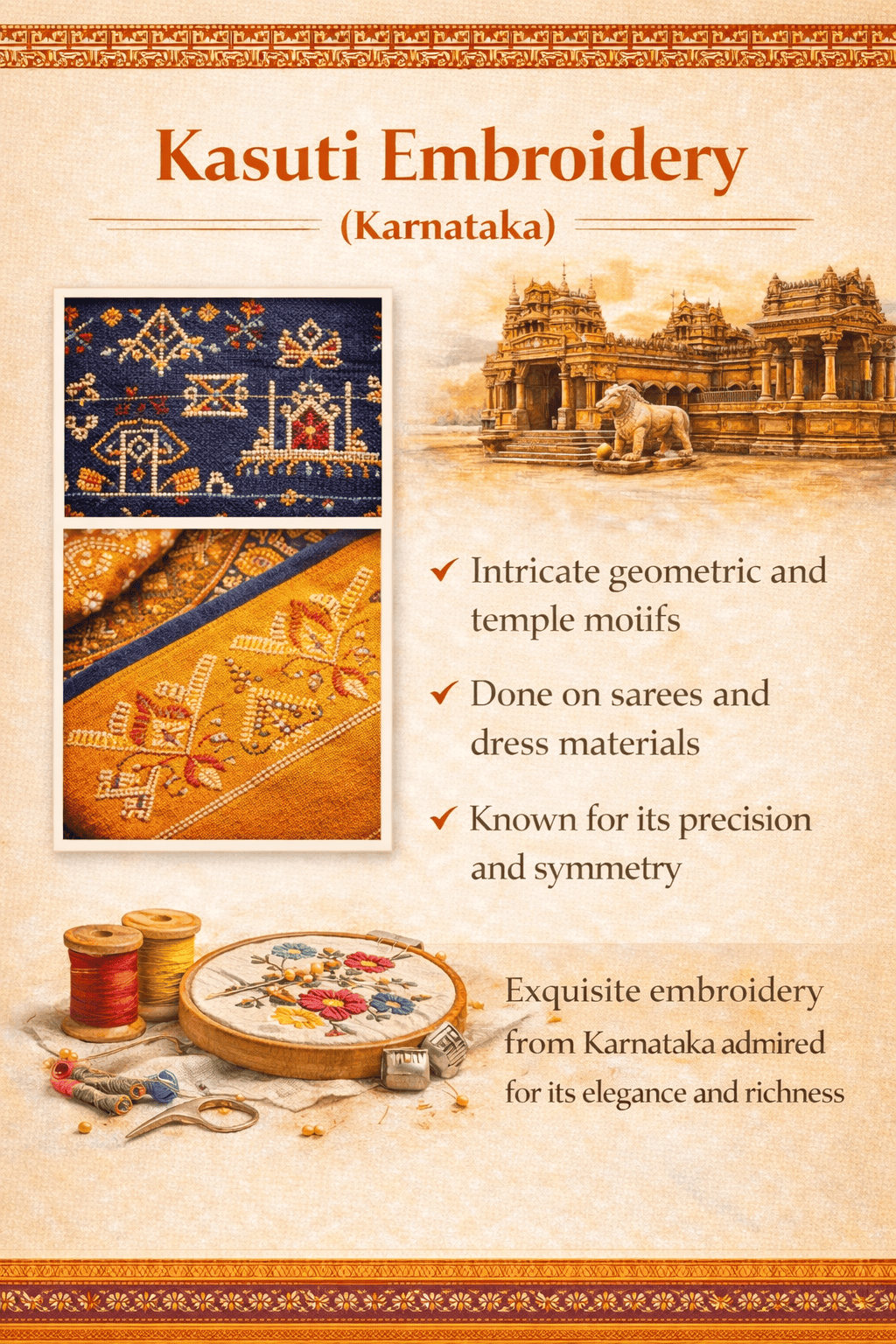
Kasuti is a traditional folk embroidery from Karnataka, particularly practiced in the Dharwad district. What sets Kasuti apart is its extraordinary precision — the embroidery is done without knots, creating identical patterns on both sides of the fabric. This requires exceptional skill, as artisans must count threads meticulously to ensure perfect symmetry.
The motifs are geometric and heavily influenced by temple architecture — gopurams (temple towers), chariots, palanquins, and stylized floral designs. The Traditional Indian embroidery done using black or red thread on unbleached cloth, though contemporary versions experiment with color.
Kasuti is typically found on sarees, blouses, and dress materials. A single Kasuti piece can take weeks or even months to complete due to its intricate detail and the labor-intensive counting technique. It remains a treasured craft, symbolizing patience, precision, and cultural pride.
Aari Embroidery – Gujarat
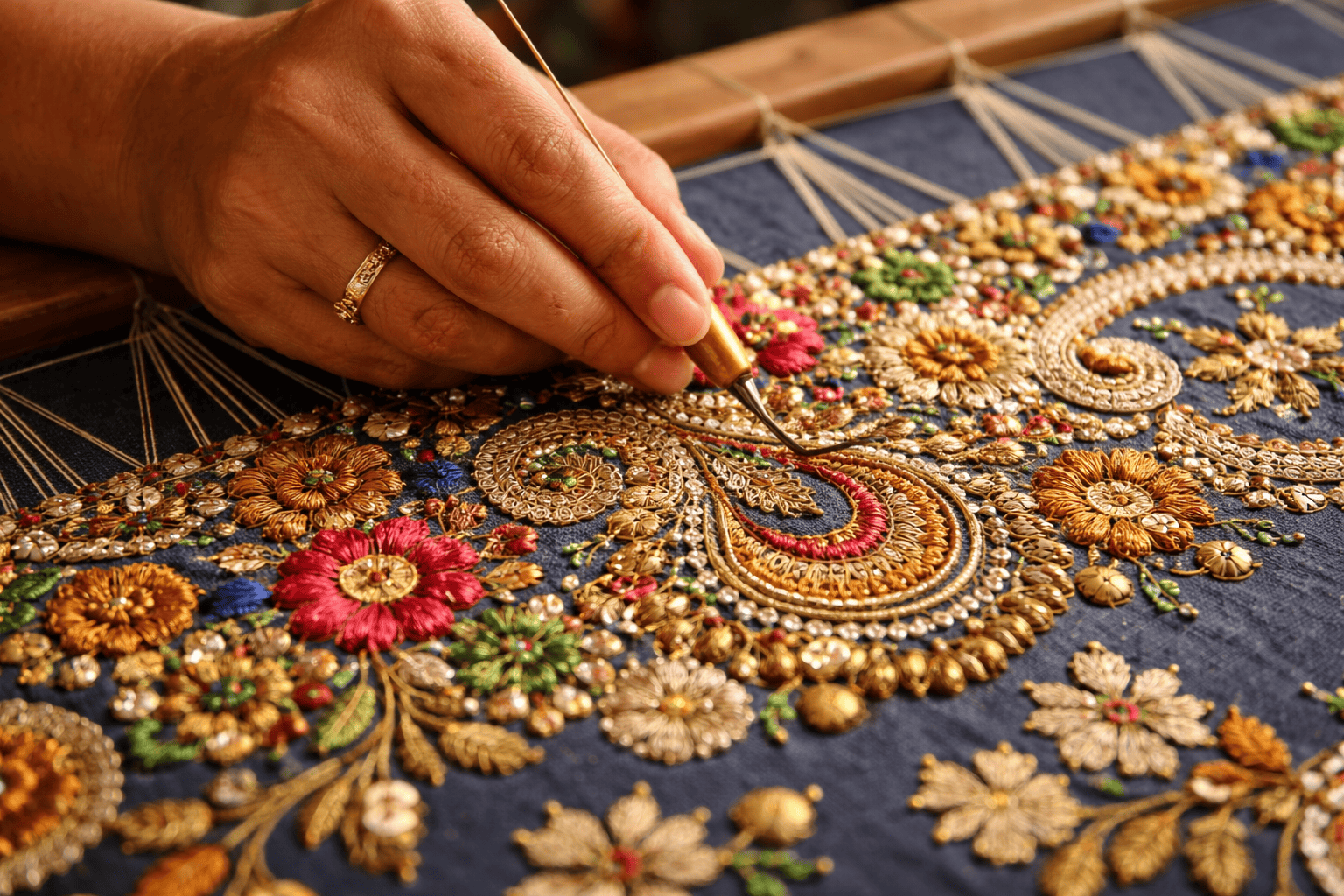
Aari embroidery traces its origins to the 12th century, first developed by the Mochi (cobbler) community in Gujarat who used hooked needles to embellish leather footwear. Under Mughal patronage, this technique was adapted for fine textiles, becoming one of India’s most intricate embroidery styles & it play a lead role in Traditional Indian embroidery.
The name “Aari” comes from the aar or aari — a hooked needle resembling an awl. The fabric is stretched tightly over a wooden frame called an adda or khatla. The artisan holds the thread beneath the fabric with one hand while plying the hooked needle from above with the other, creating rapid chain stitches that form intricate patterns.
Aari work is often embellished with beads, sequins, and metallic Zari threads, creating rich, textured designs. Motifs are inspired by Mughal gardens, nature, and wildlife — peacocks, flowers, vines, and geometric patterns. In traditional Indian Embroidery Aari embroidery is a staple in bridal lehengas, anarkalis, and luxury ethnic wear, prized for its fine craftsmanship and ornate beauty.
3. Other Popular Traditional Indian embroidery Styles
- Kutch Embroidery (Gujarat) — Vibrant mirror work combined with colorful threads, geometric patterns, and herringbone stitches. Popularized by the Rabari community, this embroidery reflects the festive, desert culture of Gujarat.
- Shisha/Mirror Work (Gujarat, Rajasthan) — Small mirrors embedded into fabric using chain stitches and buttonhole techniques. Originally done with mica, now uses glass mirrors. Believed to ward off evil spirits, this embroidery adds sparkle to traditional and modern garments alike.
- Toda Embroidery (Tamil Nadu) — Practiced by the Toda tribe in the Nilgiri Hills, this embroidery uses darning stitches on thick white cotton cloth with red and black stripes. Buffalo motifs — sacred to the Toda people — are central to the designs, along with stylized suns, moons, and peacock feathers.
- Pipli Appliqué (Odisha) — Colorful patchwork and appliqué technique from Pipli village, originally used to decorate chariots for the Puri Rath Yatra. Features bold designs of Hindu gods, animals, flowers, and vehicles stitched onto velvet with mirror and lace embellishments.
- Sujani (Bihar) — Storytelling embroidery using chain stitch and running stitch to depict social and domestic themes. Traditionally created by women in rural Bihar, Sujani quilts served both functional and narrative purposes.
Conclusion:-
Celebrating India’s Embroidery Heritage
Traditional Indian embroidery is far more than an artistic technique — it is a living expression of India’s history, culture, and collective identity. Every stitch, whether it is the delicate white elegance of Chikankari, the vibrant storytelling of Phulkari, the sustainable charm of Kantha, or the regal opulence of Zardozi, carries centuries of knowledge shaped by region, climate, belief, and community.
In 2026, these embroidery traditions are not fading into history; they are evolving with time. Designers, artisans, and conscious consumers are rediscovering the value of handcrafted work, blending traditional embroidery with modern silhouettes while preserving its soul. This renewed appreciation not only keeps the craft relevant but also supports the livelihoods of thousands of skilled artisans across India.
By understanding and choosing traditional Indian embroidery, we become part of this journey — honoring heritage, celebrating craftsmanship, and ensuring that these remarkable art forms continue to thrive for generations to come. Every embroidered garment you wear is not just fashion; it is a story stitched in thread, worth preserving, wearing, and passing on with pride.